
Helping Charlie Bird and others with MND speak with their own voice.
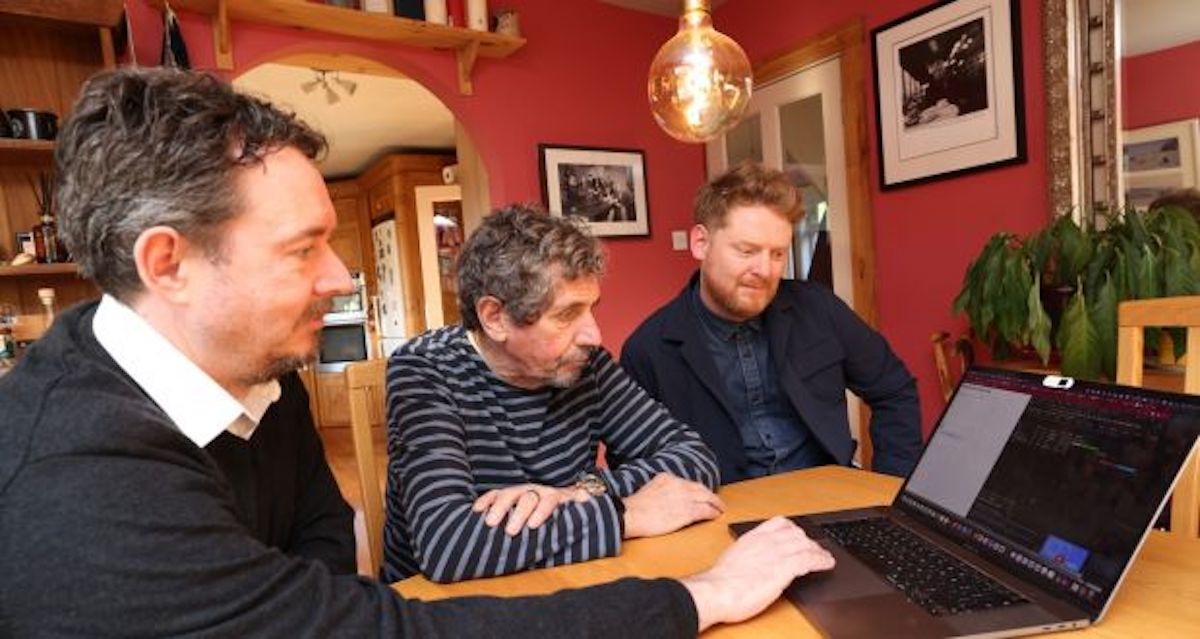
The BriefIn late 2021, legendary Irish broadcaster Charlie Bird was diagnosed with Motor Neurone Disease (MND). For a man whose career and identity were built on his unmistakable voice, the prospect of losing it was devastating. While standard text-to-speech technology exists, it often sounds robotic and impersonal. Charlie’s wife, Claire, reached out to the team at Marino Software—who had previously developed a communication app for the RTÉ program Big Life Fix—to see if we could create a digital version of Charlie’s voice that retained his unique character, warmth, and cadence.
Our objective was to leverage AI and Machine Learning to "clone" Charlie’s voice before it was lost entirely. We aimed to build a custom, high-fidelity synthetic voice that would allow Charlie to communicate authentically with his family, friends, and the public. Beyond Charlie, our broader goal was to refine this "ReVoice" technology into a scalable platform, making personalised voice-banking accessible to the 400,000+ people worldwide living with MND.
The project was a race against time and a challenge in data processing.
Data Sourcing: Unlike most users who must record new samples, we had access to decades of Charlie’s broadcasting archives. Working with Claire Bird, we sifted through hours of audio to find the cleanest, most representative samples.
Audio Engineering: We meticulously cleaned the selected audio, removing ambient noise and breaths to create a "pure" dataset.
Machine Learning: We fed this data into various machine learning algorithms. Through an iterative process of testing and refining, we generated a digital voice that didn't just say the words, but sounded like Charlie.
The App: We integrated this voice into an easy-to-use interface, allowing Charlie to type sentences that are instantly spoken in his trademark tones.
The result was a breakthrough in assistive technology. When Charlie first heard his digital voice, he and Claire were stunned by the realism.
Personal Autonomy: The technology enabled Charlie to continue his public advocacy, meet with the Taoiseach, and enjoy lunch with his daughters—all while sounding like himself.
Emotional Connection: By preserving his "trademark" voice, we helped mitigate the trauma of vocal loss, allowing Charlie to maintain his confidence and sense of identity.
Scalability: The success of Charlie’s voice has paved the way for Marino Software to explore funding models to bring this technology to the wider MND community, ensuring that "losing your voice" no longer means losing your identity.
"Being able to keep your own voice as close as possible to the real thing is something that hugely helps with the trauma of losing your voice."

Have a project in mind, or just starting to think one through? We’re good at both.
Get in touch


